Thursday, March 17, 2016

The Airport

http://www.bbc.co.uk/worldservice/learningenglish/flatmates/episode50/languagepoint.shtml

Parts of an airport:

a duty-free shop
a shop in an airport where you don't have to pay taxes on the goods you buy

a departure lounge
the part of an airport where you wait until you get on the plane

a gate
the place in the airport where you go to get onto your flight

a runway
the part of an airport, like a road, which planes use when arriving or departing from an airport

a control tower
the building in an airport which tells planes when it is safe for them to take off and land

Air travel jobs:

the cabin crew
the people who look after passengers during a flight

a pilot
a person who flies a plane

a baggage handler
a person who is responsible for your luggage, after you check-in, and takes it to the plane

an immigration officer
a person who checks your visa and passport when you go into a country

a customs officer
a person who checks you are not trying to bring illegal food, drugs, guns or other items into a country


Things you find on a plane:

a cockpit
the place where the pilots sit to control the plane

a galley
the area on a plane where the cabin crew prepare meals and store duty-free goods etc.

a trolley
a small cupboard with wheels. Cabin crews use trolleys to take food and drink to passengers during a flight

a seatbelt
a safety feature on planes to secure passengers in their seats

an overhead locker
a storage area above passengers' heads in a plane

a tray-table
a small table that is stored in the back of the seat in front of you on a plane

an oxygen mask
a piece of safety equipment which passengers put over their nose and mouth to help them breath if there is an emergency on a plane

hand luggage (uncountable)
small bags or suitcases which passengers carry with them onto the plane

checked baggage/luggage (uncountable)
large suitcases or bags which passengers don't carry with them onto the plane but which are put in the hold (the storage area of a plane)


Verbs about air travel:

to check in
to show your travel documents to the airline staff in the airport so that you can begin your journey

to board/to embark
to go onto a plane at the beginning of the journey

to disembark
to get off a plane

to take off
to start flying in the air

to taxi
to move a plane slowly along the ground before or after flying

to cruise
to fly at a steady speed

to land
to bring a plane down to the ground

to fasten/unfasten a seatbelt
to secure two parts of your seat-belt together/to untie your seatbelt

to approach (the runway)
to fly at slow speak towards the runway

to declare
to give information about goods or money you are bringing into a country

Vocabulary:

a standstill:
a stop or an end

a designated area:
a place that is signed for a particular purpose (for example, a designated smoking area)

a terminal building:
the part of an airport where planes arrive or depart from

a message:
text information to or from a mobile phone

to confiscate:
to take something away from someone as a punishment for doing something wrong

Flight attendants

https://collegegrad.com/careers/flight-attendants

What They Do

Flight attendants provide personal services to ensure the safety and comfort of airline passengers.

Duties

Flight attendants typically do the following:
  • Attend preflight briefings on details of the flight
  • Ensure that adequate supplies of refreshments and emergency equipment are on board
  • Assist in cleaning the cabin between flights
  • Demonstrate the use of safety and emergency equipment
  • Ensure all passengers have seatbelts fastened and ensure other safety requirements are met
  • Serve, and sometimes sell, beverages, meals, or snacks
  • Take care of passengers’ needs, particularly those with special needs
  • Reassure passengers during flight, such as when the aircraft hits turbulence
  • Administer first aid to passengers or coordinate first aid efforts, when needed
  • Direct passengers in case of emergency
Airlines are required by law to provide flight attendants for the safety and security of passengers. The primary job of flight attendants is to keep passengers safe and to ensure that everyone follows security regulations. Flight attendants also try to make flights comfortable and enjoyable for passengers.
About 1 hour before takeoff, the captain (pilot) informs attendants about evacuation procedures, the length of the flight, and weather conditions. Flight attendants must ensure that emergency equipment is working, the cabin is clean, and there is an adequate supply of food and beverages on board. Flight attendants greet passengers as they board the aircraft and direct them to their seats, assisting as needed.
Before the plane takes off, flight attendants instruct all passengers on the use of safety equipment, either by playing a video recording or demonstrating its use in person. They also ensure that seatbelts are fastened, seats are locked in the upright position, and all carry-on items are properly stowed in accordance with federal law and company policy.
A flight attendant’s most important responsibility, however, is to help passengers in the event of an emergency. This responsibility ranges from dealing with unruly passengers to performing first aid, fighting fires, and directing evacuations. Flight attendants also answer questions about the flight, attend to passengers with special needs, help anyone else needing assistance, and generally assist all passengers as needed.
Before the plane lands, flight attendants once again ensure that seatbelts are fastened, seats are locked in the upright position, and all carry-on items are properly stowed.
Before they leave the plane, flight attendants take inventory of headsets, alcoholic beverages, and payments. They also submit reports to the airline company on the condition of the cabin, as well as on any medical problems that may have occurred during the flight.

Important Qualities

Attentiveness. Flight attendants must be aware of passengers’ needs to ensure a pleasant travel experience. They must also be aware of any security or safety risks.
Communication skills. Flight attendants should speak clearly, listen attentively, and interact comfortably with passengers and other crew members.
Customer-service skills. Flight attendants should have poise, tact, and resourcefulness to handle stressful situations and meet passengers' needs.
Decision-making skills. Flight attendants must be able to act decisively in emergency situations.
Physical stamina. Flight attendants may need to lift baggage and stand and walk for long periods. They often need to conform to height and weight requirements and have vision that is correctable to at least 20/40. Flight attendants may have to pass a medical evaluation.
Flight attendants should present a professional appearance and not have visible tattoos, body piercings, or an unusual hairstyle or makeup.


Thursday, March 3, 2016

Dislocated shoulder/ hip/ jaw


Bruised ribs and thighs


Complaint

2 illness

ADJ.  + COMPLAINT 

> mild, minor | 
> chronic | 
> common Not being able to sleep at night is a very common complaint.
> back, chest, etc. | 
> medical 
 

VERB + COMPLAINT  
> have, suffer from He has a minor skin complaint.

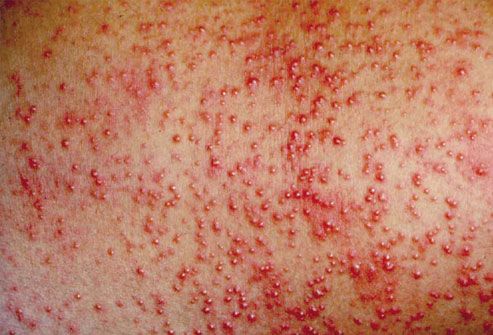
Rash

noun [countable]     rash pronunciation in British English
/ræʃ/

an area of small red spots on your skin, caused by an illness or an allergic reaction to something that you have touched, eaten etc
Heat Rash

Nappy rash 

Nettle Rash

Sunday, February 14, 2016

Amount, Quantity or Number?

Source: http://www.bbc.co.uk/worldservice/learningenglish/grammar/learnit/learnitv129.shtml

AMOUNT
An amount of something is how much of it there is that you can measure. 
Amount is normally uncountable, so we CANNOT say: 'a large amount of cows were infected.'
But we would say:
  • The amount of work I got through in July was double the amount that I did in June.
  • No amount of love would heal the hatred she felt.
  • I had a certain amount of respect for him: he was a good footballer and a good ambassador for his country.
We can also use amount as a verb, as in amount to, and again this describes the counting or measuring of something:
  • When you added everything up, his total expenditure on this project amounted to £9,950.
  • I don’t think the talks in Helsinki will amount to very mucH.
QUANTITY
Similarly, a quantity is an amount of something that you can measure or count. We often talk about large or small quantities of something. It is usually applied to inanimate objects so again it is unlikely that we would say: 'a large quantity of cows were infected'. But we would say:
  • There were very small quantities of peppers on sale in the market.
  • There are very large quantities of gas beneath the North Sea.
We often contrast quantity with quality:
  • It doesn’t matter how many words you write: it is the quality that is important, not the quantity.
  • These toys are sold in quantity and the quality doesn’t seem to matter
 NUMBER
We use number to describe how many, and often we do not know exactly how many there are. This is one of the defining aspects of a number of. Number is countable and can be applied to both animate and inanimate items, so this is the one that fits your sentence:
  • a large number of cows were infected.
  • There are a number of reasons why I can’t marry you.
  • A number of people were injured in the explosion.
  • I had warned her not to go there any number of times, but she wouldn’t listen

Tuesday, February 2, 2016

Fractal patterns in nature

http://www.wired.com/2010/09/fractal-patterns-in-nature/

Fractals are patterns formed from chaotic equations and contain self-similar patterns of complexity increasing with magnification. If you divide a fractal pattern into parts you get a nearly identical reduced-size copy of the whole.
The mathematical beauty of fractals is that infinite complexity is formed with relatively simple equations. By iterating or repeating fractal-generating equations many times, random outputs create beautiful patterns that are unique, yet recognizable.

Romanesco Broccoli

This variant form of cauliflower is the ultimate fractal vegetable. Its pattern is a natural representation of the Fibonacci or golden spiral, a logarithmic spiral where every quarter turn is farther from the origin by a factor of phi, the golden ratio.
Image: Flickr/Tin.G.


Mountains

Mountains are the result of tectonic forces pushing the crust upward and erosion tearing some of that crust down. The resulting pattern is a fractal.
Above is an image of the Himalayan Mountains, home to many of the tallest peaks on Earth. The Himalayas are still being uplifted by the collision of India with the Eurasian plate, which began about 70 million years ago.
Image: NASA/GSFC/JPL, MISR Team.


Ferns

Ferns are a common example of a self-similar set, meaning that their pattern can be mathematically generated and reproduced at any magnification or reduction. The mathematical formula that describes ferns, named after Michael Barnsley, was one of the first to show that chaos is inherently unpredictable yet generally follows deterministic rules based on nonlinear iterative equations. In other words, random numbers generated over and over using Barnsley's Fern formula ultimately produce a unique fern-shaped object.


In the eye of the beholder


Jackson Pollock's Summertime : Number 9A

Pollock's No. 5

Monday, February 1, 2016

COLLOCATIONS

advise 

1. to give your opinion to someone about the best thing to do in a particular situation
I’m afraid I’m not able to advise you.
 
> advise someone to do something:
Her doctor advised her to rest.
Students are advised to read all the questions carefully.
 
> advise someone against something:
Police are advising the public against travelling in the fog.
 
> advise someone that:
The bank advised us that we should increase our insurance cover.
 
> advise that:
Experts advise that sunscreen should be reapplied on an hourly basis.
 
> strongly advise:
I strongly advise you to reject the offer.

recommend

1. to advise someone that they should do something
> recommend (that):
I recommend that you buy a more powerful computer.
 
> strongly recommend:
We strongly recommend you insure your luggage when you travel.
 
> recommend doing something:
We recommend booking early, as this is a popular event.
 
> recommend someone to do something:


suggest


1.to offer an idea or a plan for someone to consider
The report suggested various ways in which the service could be improved.
 
>suggest (that):
I suggest we have dinner first, and then watch the film.
 
> suggest what/why/where etc:
Can anyone suggest what we should do to increase sales?
 
> suggest doing something:
If there is a mechanical problem, we suggest contacting the manufacturer directly.

> Suggest is never followed by a direct personal object. Use the preposition to:

✗ If this happened to one of your friends, what would you suggest her?
✓ If this happened to one of your friends, what would you suggest to her?
 
2. to tell someone about something that may be useful or suitable for a particular purpose
> suggest + noun
Can you suggest an inexpensive restaurant?
 

Wednesday, January 27, 2016

Collocations

VERB + CAREER 

> build, carve out, have, make, pursue He made a good career for himself in football. She pursued a successful career in medicine. 

> begin, embark on, launch, start (out on) young actors just starting out on their careers 
> boost 
> abandon, give up 
> cut short, end, ruin, wreck a car crash which wrecked his career 
> resume 
> change

Tuesday, January 26, 2016

Collocations

VERB + RELATIONSHIP  

> enjoy, have They enjoyed a close working relationship. The school has a very good relationship with the community. He had brief relationships with several women.

> begin, build (up), develop, establish, foster Building strong relationships is essential. They established a relationship of trust.

> cement, improve, strengthen | 

> continue, maintain | 

> handle, manage He's not very good at handling personal relationships.

> break off She broke off the relationship when she found out about his gambling.  

> destroy Lack of trust destroys many relationships.

Thursday, December 3, 2015

Conjunctions


http://grammar.yourdictionary.com/parts-of-speech/conjunctions/what-is-a-conjunction.html

A conjunction is the glue that holds words, phrases and clauses (bothdependent and independent)

Read more at http://grammar.yourdictionary.com/parts-of-speech/conjunctions/what-is-a-conjunction.html#yYRd21DXIPpkf4gL.99

Linking Adverbs

http://grammar.yourdictionary.com/parts-of-speech/adverbs/list-of-conjunctive-adverbs.html
List of Conjunctive Adverbs
While writing, a list of conjunctive adverbs 
may be helpful for some people. The purpose of 
a conjunctive adverb is to show a relationship 
between clauses such as comparing or contrasting, 
showing a sequence of events, or showing a cause and effect.
Conjunctive Adverbs
An adverb is a part of speech that modifies a verb,
adverb, adjectives, clauses, and sentences, anything
but a noun. Many adverbs end in -ly, although not all of them.
conjunction is a part of speech that connects phrases
and clauses. Therefore, a conjunctive adverb is a type
of adverb that joins together two clauses. These clauses
 are usually independent clauses, otherwise known as
complete sentences.
Examples of Conjunctive Adverbs
This chart is a partial list list of conjunctive adverbs.
There are many more to choose from.
image: http://www.yourdictionary.com/index.php/pdf/articles/pdfthumbs/144.conjunctiveadverblist.jpg

View & Download PDF
Examples of Conjunctive 
Adverbs in Sentences

  • You must do your homework; otherwise, you might get a bad grade.
  • I will not be attending the show. Therefore, I have extra tickets for anyone that can use them.
  • Amy practiced the piano; meanwhile, her brother practiced the violin.
  • Marion needed to be home early. Consequently, she left work at 3 p.m.
Correct Punctuation
To correctly punctuate a conjunctive adverb,
a writer will use a semicolon or period at the
end of the first independent clause. The conjunctive
adverb is then used followed by a comma and the
 next independent clause.
Read more at http://grammar.yourdictionary.com/parts-of-speech/adverbs/list-of-conjunctive-adverbs.html#zZm8Dc6xmWTD8TIq.99